
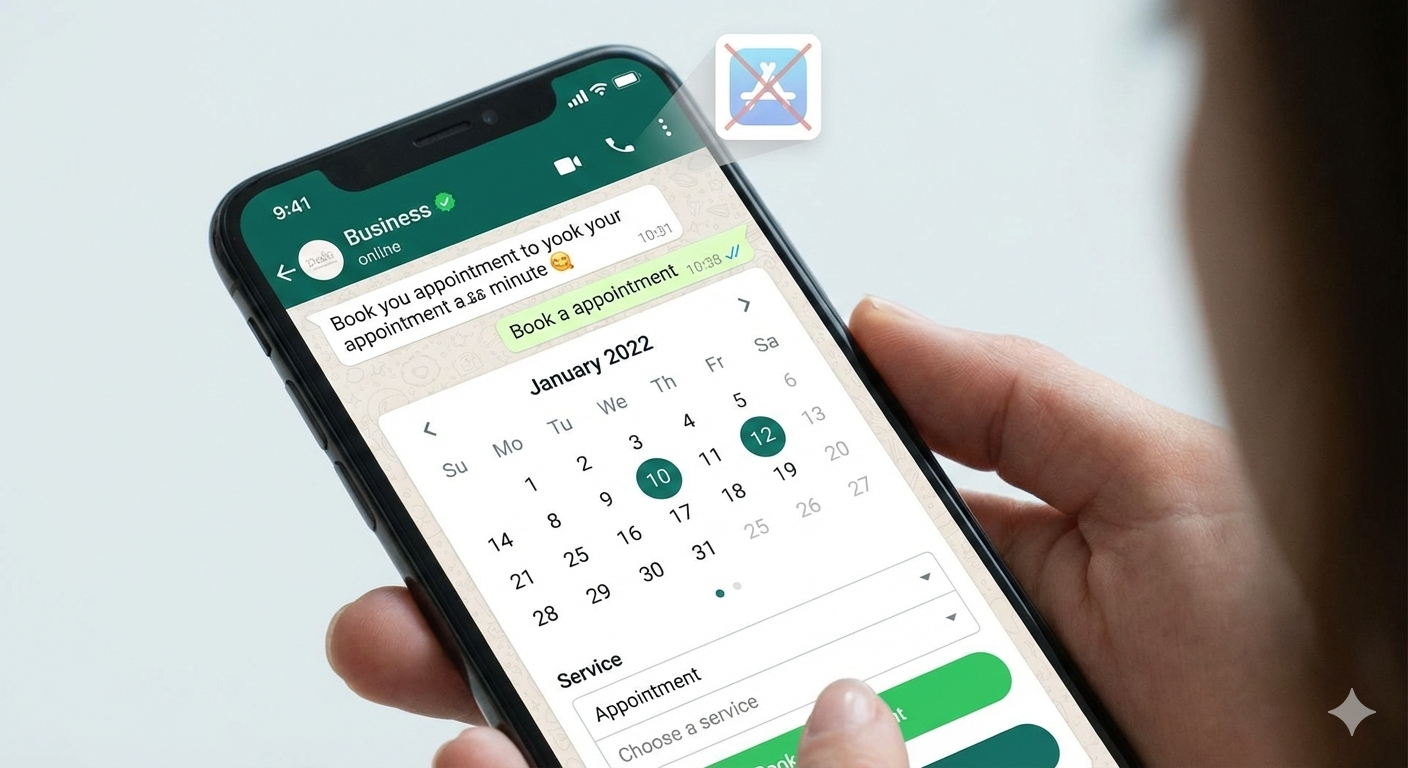
In South Africa, WhatsApp has quietly become far more than a messaging app. For millions of people, it's the primary way they communicate with friends, family, and increasingly with businesses. It's checked constantly throughout the day, trusted instinctively, and already installed on almost every smartphone. That alone makes it one of the most powerful digital channels in the country — but what's happening behind the scenes with the WhatsApp Business API is what truly changes the landscape.
For years, business interactions on WhatsApp were relatively simple: a customer sent a message and a business replied. Useful, but limited. That model is now shifting. WhatsApp is steadily introducing richer capabilities into its Business API, including interactive actions, structured responses, and form-like experiences that live entirely inside the chat. These aren't cosmetic upgrades — they fundamentally change how digital services can be delivered, especially in a market like South Africa.
What makes this evolution so compelling locally is how well it aligns with real behaviour. South Africans are cautious about downloading new apps. Data costs still matter, storage space is often limited, and there's a natural resistance to new interfaces and logins. WhatsApp removes all of that friction. Users already know how it works and already trust it. By keeping the entire experience inside WhatsApp, businesses no longer need to push users to external apps, websites, or portals just to complete basic tasks.
As WhatsApp introduces actions and guided flows into chats, conversations start to behave more like applications — but without the usual overhead. Users can tap buttons, answer questions step by step, and submit information in a structured way, all while staying in the conversation. From their perspective, nothing feels complicated. From a business perspective, those simple interactions can now drive real processes like onboarding, bookings, confirmations, or support escalation.
This shift is just as important for software developers as it is for end users. Traditionally, building a customer-facing digital experience meant worrying about UI design, notification systems, device compatibility, app updates, and the ongoing cost of maintaining infrastructure. WhatsApp removes a large portion of that burden. Notifications are already built in and universally enabled. The interface is consistent across devices. Design decisions are minimal because the patterns are familiar and standardised. You don't need to reinvent layouts, flows, or user behaviour — WhatsApp has already done that work.
Infrastructure complexity also drops dramatically. Instead of maintaining full mobile applications, push notification services, and multiple front-ends, developers can focus on the core logic: how messages are handled, how actions are processed, and how data flows into existing systems. The chat becomes the interface, and WhatsApp becomes the delivery layer. This makes it faster to build, easier to maintain, and far simpler to scale.
What's especially powerful in the South African context is how invisible this all is to the user. There's no setup, no configuration, no new notifications to enable, and no concern about whether something will work on a specific device. Messages simply arrive in a place people already pay attention to. That reliability is something most apps struggle to achieve, even with significant effort.
As these capabilities continue to mature, WhatsApp is no longer just a communication channel. It's becoming an application layer in its own right — one that combines conversation, actions, and outcomes in a single, familiar space. For businesses and developers alike, this represents a shift away from heavy apps and complex platforms toward simpler, more human digital experiences.
In a country where ease of use, accessibility, and trust matter deeply, WhatsApp's growing role makes complete sense. The future of customer interaction in South Africa isn't about asking users to download more software. It's about doing more, intelligently and seamlessly, inside the software they already use every day.